Article Content
Let's stay in touch!
Subscribe to our newsletter and stay updated
At some point in your life, someone you know will be affected by a stroke. It could be you.
Worldwide, stroke is the second leading cause of death and a major cause of disability.1 In the United States alone, someone has a stroke every 40 seconds,2 and someone dies every 3 minutes and 11 seconds from this condition.3
Back in the day, stroke was considered exclusive to older adults and the elderly, but today, due to factors related to lifestyle, more young people are affected by stroke. Indeed, 1 in 7 strokes occur in people, between the ages of 15 and 49.4
Fortunately, thanks to medical advances, more people now survive strokes and recover better. But drugs and treatments are only effective when applied right away, within hours after a stroke occurs. The sooner you recognize that a person is having a stroke, the sooner they can get help, and the greater their chances of survival and full recovery.
What is a stroke?
A stroke happens when a blood vessel that brings blood to the brain gets blocked or bursts. Because of this damage, part of the brain doesn’t receive blood. Without blood, oxygen and nutrients can’t reach brain cells, causing cell death.5
When brain cells stop working, the parts of the body they control also cease to work. Thus, the physical or mental effects of a stroke depend on where the stroke happens in the brain.5
Doctors categorize strokes into three types, depending on how the brain’s blood supply is affected.
Ischemic Stroke
Is the most common type of stroke (it accounts for about 87% of all stroke cases). It happens when a blood vessel gets blocked, preventing the passage of blood. The blockage can be caused by a blood clot or fat deposits.6
Hemorrhagic Stroke
Is not as common (it accounts for 10–15% of all stroke cases), but it’s more damaging and often fatal. This type of stroke happens when the walls of a blood vessel become weakened, causing the vessel to burst and leak blood into the brain.4 The blood leak causes swelling, which can affect more areas of the brain. People who have a defective blood vessel or suffer a head trauma have a higher chance of developing this type of stroke.7
Transient Ischemic Attack
Also known as mini-stroke, is less common (it accounts for around 2.3% of all stroke cases). It happens when a blood vessel is blocked, generally by a blood clot, but it resolves on its own within minutes.4 Because a mini-stroke lasts only a few minutes, many people don’t go to the doctor, so it often goes unreported. However, a mini-stroke can be a precursor to a greater stroke; thus, it’s important to seek medical attention even if the symptoms disappear.4
Recognizing the type of stroke determines the type of treatment needed. Doctors use specialized imaging techniques like magnetic resonance imaging (MRI) or computed tomography (CT) scans to diagnose whether the stroke is caused by a blocked or a damaged blood vessel.4
What causes a stroke? Key risk factors you shouldn’t ignore
Stroke can happen at any age; young people are not immune. However, as we age, our chances of having a stroke increase, especially after age 55. Also, the older we are, the harder it is to reach full recovery after a stroke.4
Although you can’t control aging, you can reduce your chances of having a stroke by managing health concerns or behaviors that can affect blood circulation.5
Controlling the following risk factors through lifestyle changes or medication can help protect you from strokes.
High Blood Pressure
When the force of the blood pushing against the walls of the blood vessels is too high, the lining of the blood vessels becomes stiffer, narrower, and prone to developing clots. Indeed, people with high blood pressure are 3 or 4 times more likely to have a stroke.4
High Blood Fats
Cholesterol and triglycerides can accumulate in the blood vessels, making them narrower, stiffer, and prone to getting blocked.5
Diabetes
When too much sugar builds up in the blood, the lining of the blood vessels gets damaged and becomes stiffer. The excess sugar also provokes swelling of the blood vessels, promoting fat accumulation, potentially blocking the blood vessels. People with diabetes have a higher risk of having a stroke, regardless of age.4
Tobacco Use
Tobacco products contain nicotine and many toxic substances that weaken and damage the blood vessels and reduce the amount of oxygen that enters the cells.4 People who smoke tobacco products are at higher risk of having a stroke. For example, for each 5 cigarettes a person smokes per day, their risk of having a stroke increases by 12%,8 and the odds are even higher for people who vape.9
How to recognize the warning signs of a stroke?
When it comes to stroke, ‘time is brain’. You need to be fast. The sooner you recognize that a person is having a stroke, the sooner that person can get treatment and the better their chances of fully recovering.4
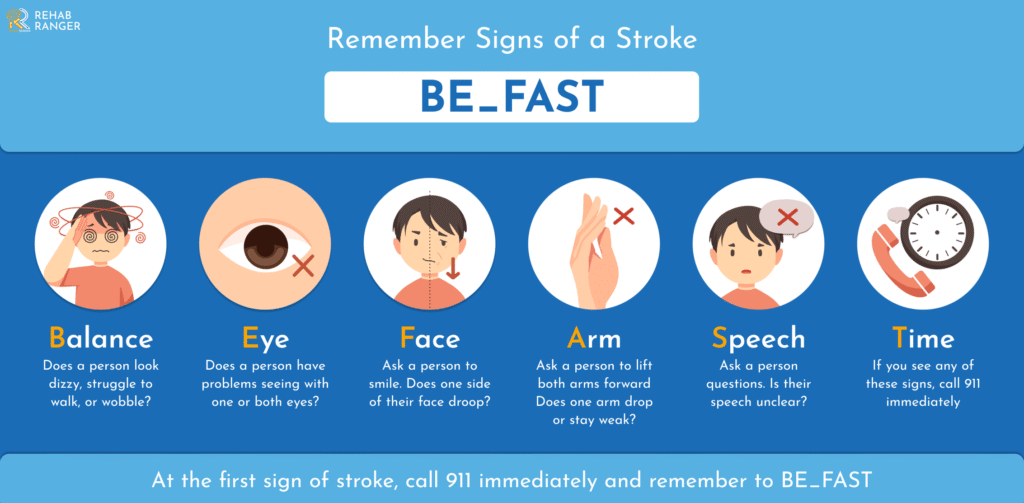
BE_FAST is an easy way to remember the signs of a stroke.10 It stands for:
B – Balance. Does a person look dizzy, struggle to walk, or wobble?
E – Eye. Does a person have problems seeing with one or both eyes?
F – Face. Ask a person to smile. Does one side of their face droop?
A – Arm. Ask a person to raise both arms straight in front of them. Does one arm drop or cannot be raised at all?
S – Speech. Ask a person questions. Is their speech hard to understand?
T – Time. If you see any of these signs, call 911. This person may be having a stroke. The sooner you act, the better their chances of surviving and recovering.
What happens after a stroke? Recovery, Rehab, and Hope
A stroke can change your life in minutes, but what happens next matters just as much.
After a person has a stroke, they need immediate medical attention to evaluate and treat the stroke. They may need clot-dissolving medicine or surgery to unclog or repair a blood vessel.4 Long-term care may include the intake of blood thinners, blood pressure medications, and lipid-lowering medications to avoid a future stroke.5
After a stroke, people may face physical challenges, such as paralysis or weakness on one side of their body.11 Most people may also experience mental problems, such as trouble remembering things, speaking, reading, writing, and concentrating, especially during the first few months of recovery.11
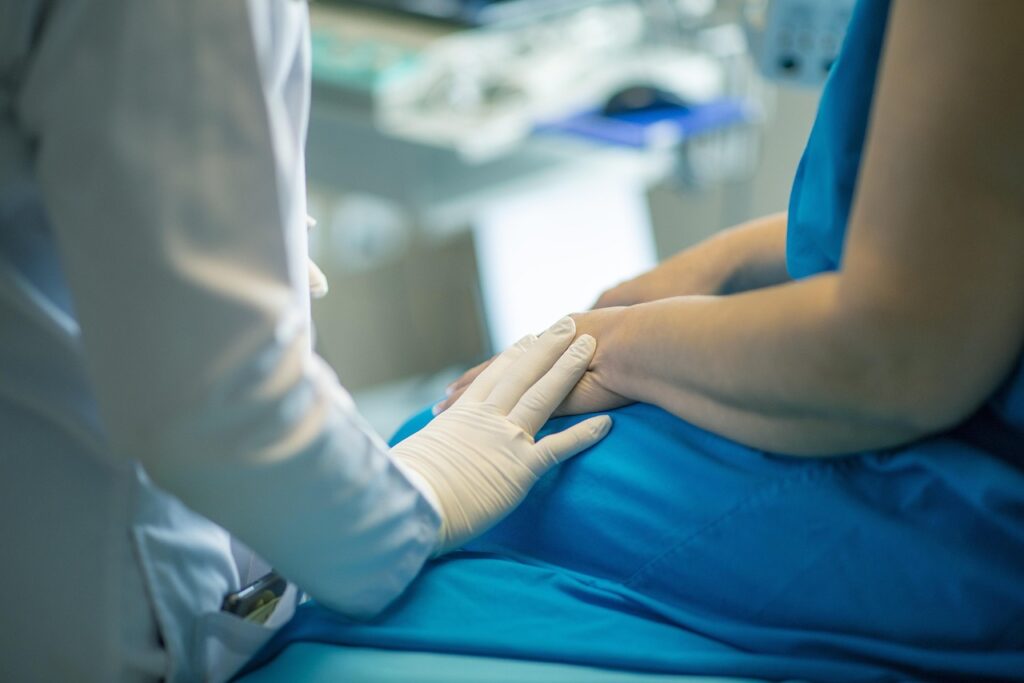
To recover, a rehabilitation plan is critical. Rehabilitation can last from a few weeks to several months, depending on the type of stroke and the extent of the brain damage.5
Rehab
Recovery
Hope
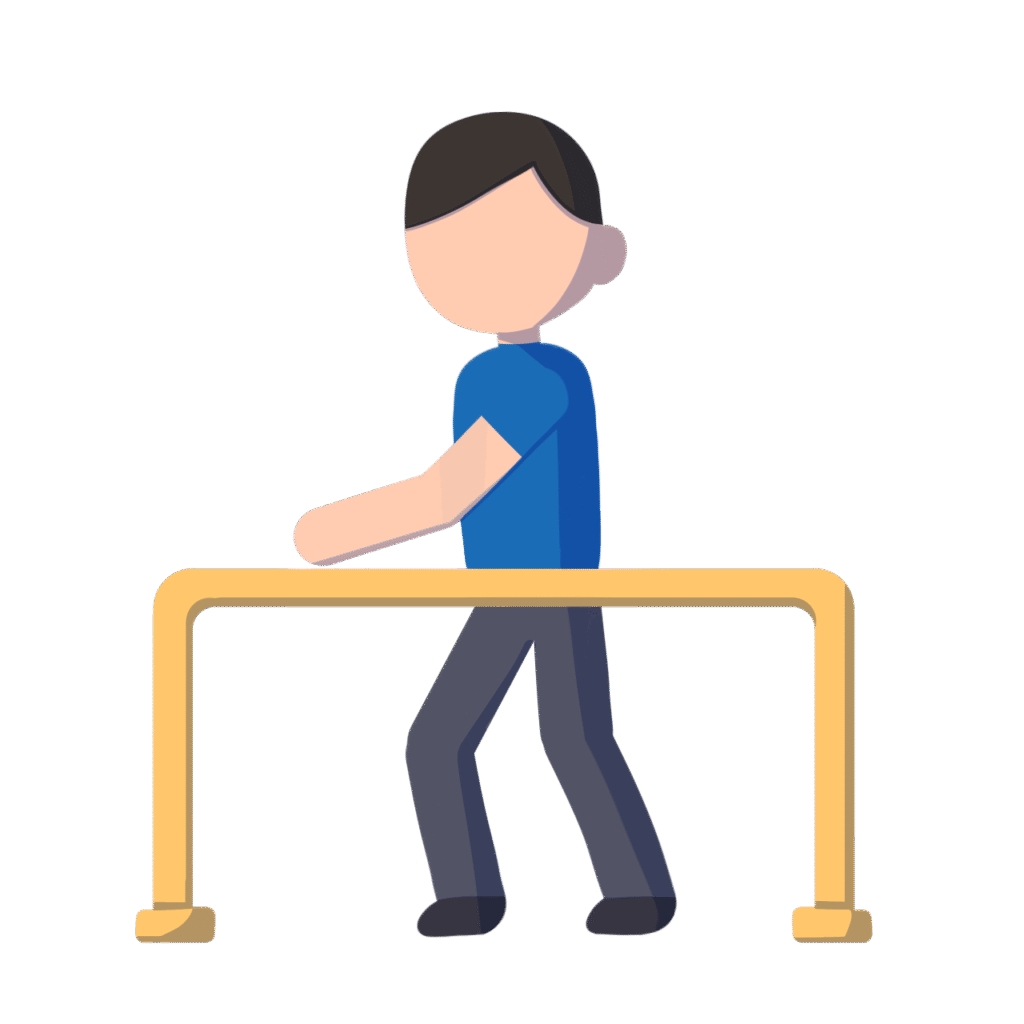
A rehabilitation plan involves physical and cognitive therapy exercises designed to help people regain their independence. Some exercises may focus on helping individuals perform routine activities, such as walking, eating, and bathing, whereas others seek to improve mental sharpness, including tasks like speaking, reading, and writing.5
Physical therapy helps people regain strength and coordination to carry out daily activities. The more a person engages in physical therapy exercises after a stroke, the faster they get better.12
Physical rehabilitation facilities provide the necessary support to help people after a stroke. However, sometimes these facilities may be costly or just too far for a patient to attend rehabilitation sessions as often as needed. Fortunately, today, some alternatives enable people to follow a physical rehabilitation plan from the comfort of their own homes, for example, home exercise programs, telemedicine sessions, or video game-based rehabilitation programs.13
Learn how Rehab Ranger™ empowers stroke survivors to recover confidently at home.
Recovery can be slow and emotionally draining. A person may feel lonely and misunderstood as life becomes unrecognizable while navigating the recovery process. But stroke is far from being a lonely journey.
Caregivers play a critical role in recovery, and therefore, they also face physical and emotional challenges while taking care of a person who has had a stroke. They also need support to avoid burnout.14
Thus, emotional counseling for the person who had the stroke and their caregivers is critical to manage feelings of frustration, anxiety, and depression. Depending on the situation, other types of counseling may also be needed for patients and their families, including guidance on financial and legal matters.5
But there is hope.
People may regain most of their physical and mental abilities after consistently following a rehabilitation plan. Physical and mental rehabilitation are non-negotiable for full recovery.15
Simple lifestyle changes that can help you prevent a stroke
Stroke doesn’t discriminate, but prevention is possible. You can be proactive and take step to improve your health and reduce your chances of having a stroke.
- Once a year, have a physical. Ask your doctor to check your weight, blood pressure, blood sugar, and blood fats.5
- Avoid secondhand smoke, and if you smoke or vape, talk to your doctor about quitting.5
- Be mindful of portion sizes and eat more fruits and vegetables.5
- Avoid processed foods as they have too much oil, sugar, and salt (salt increases blood pressure). Eating processed foods is linked to weight gain, and becoming overweight may lead to high blood pressure, diabetes, and high cholesterol.5
- Exercise daily. Being active helps you keep a healthy weight while burning fats and sugars. It also strengthens your heart and muscles, and improves blood circulation and oxygen levels in your body. Exercise also reduces stress by releasing endorphins (the feel-good chemicals).5
- If you have high blood pressure or diabetes, keep them under control with a healthy diet, exercise, and medicine if needed.5
Stroke can happen to anyone, but by making healthy lifestyle choices, your chances of having a long and healthy, stroke-free life are greater.
Take care of your health, learn the BE-FAST signs, and share this article with someone you care about—you could save a life.
By Leticia Torres
September 19, 2025
References
1. Katan M, Luft A. Global Burden of Stroke. Semin Neurol. 2018;38(2):208-211. doi:10.1055/s-0038-1649503
2. Tsao CW, Aday AW, Almarzooq ZI, et al. Heart Disease and Stroke Statistics-2023 Update: A Report From the American Heart Association. Circulation. 2023;147(8):e93-e621. doi:10.1161/CIR.0000000000001123
3. Multiple Cause of Death Data on CDC WONDER. Accessed April 8, 2024. https://wonder.cdc.gov/mcd.html
4. Ahmed Z, Chaudhary F, Agrawal DK. Epidemiology, Pathophysiology, and Current Treatment Strategies in Stroke. Cardiol Cardiovasc Med. 2024;8(4):389-404. doi:10.26502/fccm.92920399
5. WHO EMRO | Stroke, Cerebrovascular accident | Health topics. World Health Organization – Regional Office for the Eastern Mediterranean. Accessed July 1, 2025. http://www.emro.who.int/health-topics/stroke-cerebrovascular-accident/
6. Ischemic Stroke. Yale Medicine. Accessed July 14, 2025. https://www.yalemedicine.org/conditions/ischemic-stroke
7. Hemorrhagic Stroke. Yale Medicine. Accessed July 8, 2025. https://www.yalemedicine.org/conditions/hemorrhagic-stroke
8. Pan B, Jin X, Jun L, Qiu S, Zheng Q, Pan M. The relationship between smoking and stroke. Medicine (Baltimore). 2019;98(12):e14872. doi:10.1097/MD.0000000000014872
9. Patel U, Patel N, Khurana M, et al. Effect Comparison of E-Cigarette and Traditional Smoking and Association with Stroke—A Cross-Sectional Study of NHANES. Neurology International. 2022;14(2):441-452. doi:10.3390/neurolint14020037
10. Tanglay O, Cappelen-Smith C, Parsons MW, Cordato DJ. Enhancing Stroke Recognition: A Comparative Analysis of Balance and Eyes–Face, Arms, Speech, Time (BE-FAST) and Face, Arms, Speech, Time (FAST) in Identifying Posterior Circulation Strokes. Journal of Clinical Medicine. 2024;13(19):5912. doi:10.3390/jcm13195912
11. Gallucci L, Sperber C, Guggisberg AG, et al. Post-stroke cognitive impairment remains highly prevalent and disabling despite state-of-the-art stroke treatment. Int J Stroke. 2024;19(8):888-897. doi:10.1177/17474930241238637
12. Todhunter-Brown A, Sellers CE, Baer GD, et al. Physical rehabilitation approaches for the recovery of function and mobility following stroke. Cochrane Database Syst Rev. 2025;2(2):CD001920. doi:10.1002/14651858.CD001920.pub4
13. Saeedi S, Ghazisaeedi M, Rezayi S. Applying Game-Based Approaches for Physical Rehabilitation of Poststroke Patients: A Systematic Review. Journal of Healthcare Engineering. 2021;2021(1):9928509. doi:10.1155/2021/9928509
14. Let’s Talk About Being a Caregiver for a Stroke Survivor. www.stroke.org. Accessed July 9, 2025. https://www.stroke.org/en/help-and-support/resource-library/lets-talk-about-stroke/being-a-stroke-family-caregiver
15. Li X, He Y, Wang D, Rezaei MJ. Stroke rehabilitation: from diagnosis to therapy. Front Neurol. 2024;15. doi:10.3389/fneur.2024.1402729